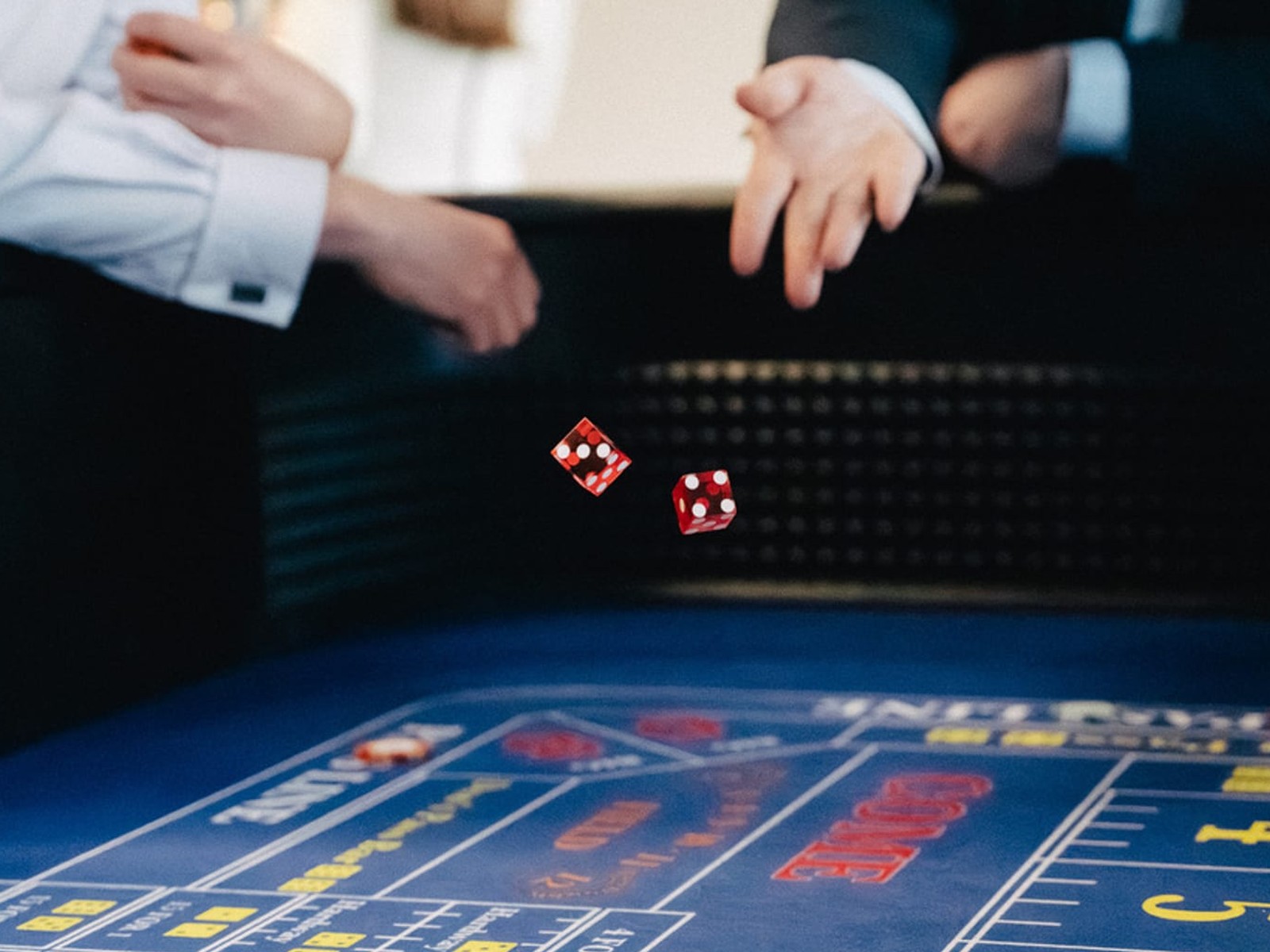
Craps has a reputation for being complicated. It isn’t. The table looks busy because it offers dozens of plays, but you only need to understand one of them to join in and have a brilliant time. It’s the most communal game on the floor: one person rolls, everyone backs the same outcome, and the whole table reacts to every throw. At a fun casino night it’s all fun money, the croupier runs the table, and the energy does the rest.
The Aim of the Game
The heart of craps is the pass line, and backing it is the only thing a first-timer needs to learn. One player, the “shooter”, rolls two dice, and you’re simply betting they’ll do well. Place your fun money on the pass line, and you’re in the game. Everything else on the table is an optional extra you can pick up later, or never bother with at all.
How a Round Works
- Back the pass line. Put your fun money on the pass line to join the round and back the shooter.
- The come-out roll. The shooter throws two dice to open the round. This first roll can settle it straight away or set up the next phase.
- A point is set. If the come-out roll isn’t an instant win or loss, the number rolled becomes the “point”.
- The shooter chases the point. They keep rolling, trying to land the point again before a 7 turns up.
- The result. Hit the point, and the pass line wins; roll a 7 first, and it loses. Either way, the next round begins.
The two sections below unpack the come-out roll and the point in a little more detail.
The Come-Out Roll
The first roll of a sequence is called the come-out roll, and it works in one of three ways.
- Roll a 7 or 11: the pass line wins straight away. A great start.
- Roll a 2, 3, or 12 (called “craps”): the pass line loses, and a new come-out roll begins.
- Roll any other number (4, 5, 6, 8, 9, or 10): that number becomes the “point”, and the game moves to its second phase.
Chasing the Point
Once a point is set, the shooter keeps rolling with one goal: to roll that same number again before they roll a 7.
- The point is rolled again: the pass line wins. Cue the cheer.
- A 7 is rolled first: the pass line loses. This is called a “seven-out”, and it passes the dice to the next shooter.
That tension, willing the point to land before the dreaded seven, is what gives craps its noise and its drama. The whole table is on the same side, rising and falling with every roll.
Tips for First-Timers
- Stick to the pass line for your first session. It’s the simplest play on the table and keeps you in step with the crowd.
- Cheer with the table. Craps is a team sport, the room wins and loses together, and that’s the whole appeal.
- When it’s your turn to be the shooter, throw the dice hard enough to hit the far wall. It’s a small ritual that keeps things fair and feels great.
- Ignore the busier corners of the layout at first. You can always add a “come” play or a number once you’ve found your feet, and the croupier will gladly show you.
Why Craps Works So Well at a Casino Night
No other table makes this much noise. A twelve-player craps table draws a crowd, builds up energy, and gives an event the unmistakable buzz of a Vegas pit. Because everyone is backing the same dice, the wins and losses are shared, and a hot streak can have the whole room roaring. If your brief is “we want the place buzzing,” this is the table that delivers it, which is why it’s a favourite for corporate evenings and big celebrations.
Bring Craps to Your Event
Now you know how it plays, see how easy it is to put a full-size table in your venue. We cover craps table hire across London and the Home Counties, with a uniformed croupier and all the fun money included.
Browse all our casino games, learn the other tables on our How to Play guides, or get a quote for your event.
FAQs
Is craps difficult to learn?
No, though it looks that way at first. The table offers a lot of options, but you only need the pass line to play. Back the shooter to do well, follow the come-out roll and the point, and you’ve got the whole game. The croupier handles everything else.
What is the “point” in craps?
If the come-out roll is a 4, 5, 6, 8, 9, or 10, that number becomes the point. The shooter then keeps rolling, trying to land the point again before they roll a 7. Hit the point, and the pass line wins; roll a 7 first, and it loses.
Do all the players play against each other?
No, and that’s the charm of it. In the basic game everyone backs the same dice, so the whole table tends to win or lose together. It’s the most communal, sociable game we hire out.
What does “seven-out” mean?
Once a point is set, rolling a 7 before hitting the point is called a seven-out. The pass line loses and the dice pass to the next shooter. It’s the roll the whole table is hoping to avoid.