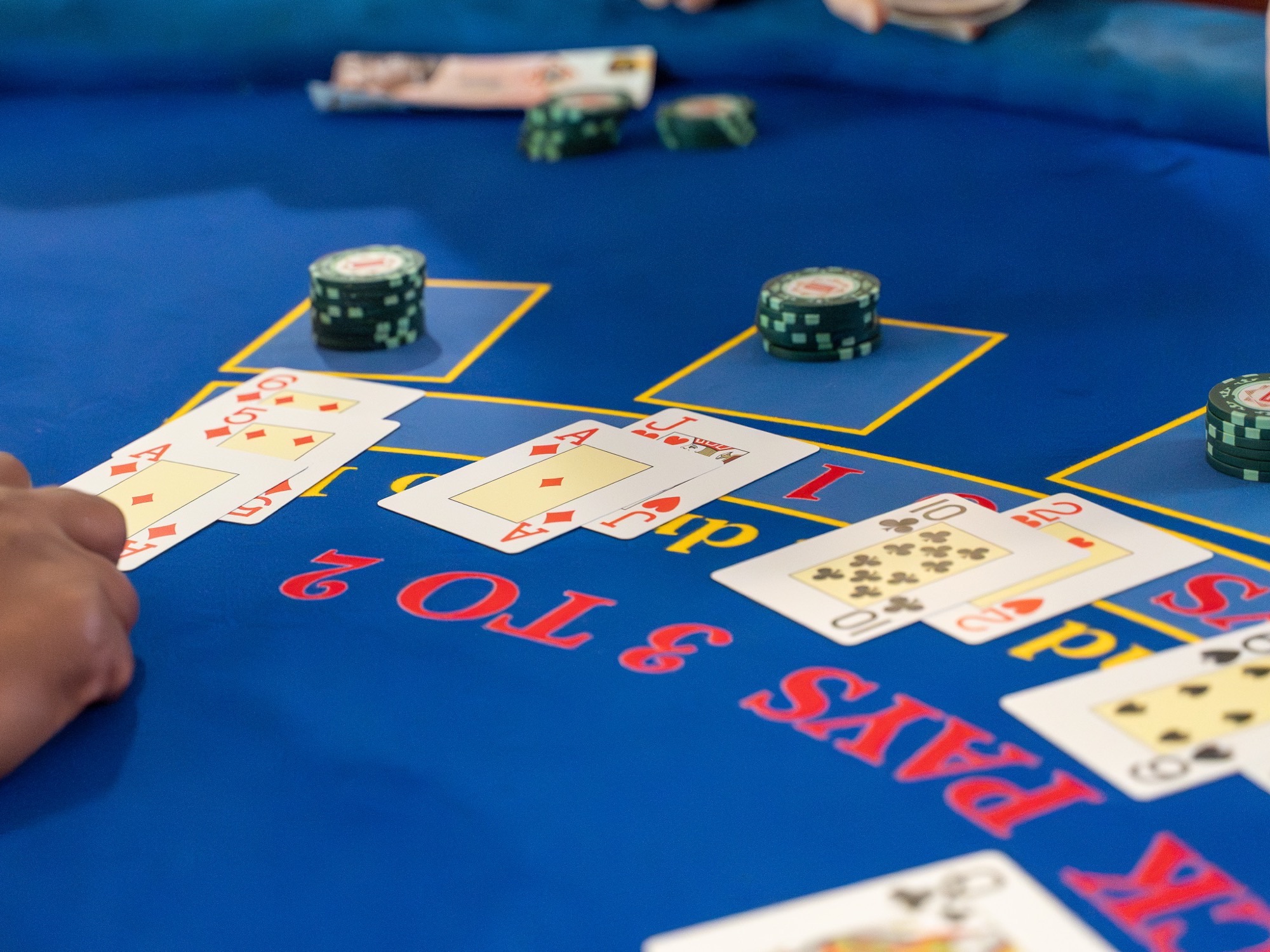
Blackjack is the most popular game at every fun casino event we run, and it’s no coincidence. The rules take about sixty seconds to explain, the rounds are fast, and there’s just enough strategy to make it feel satisfying rather than purely down to chance. You don’t need to know anything going in: our croupiers explain everything at the table. But if you’d like to understand how the game works before your event, this is the guide for you.
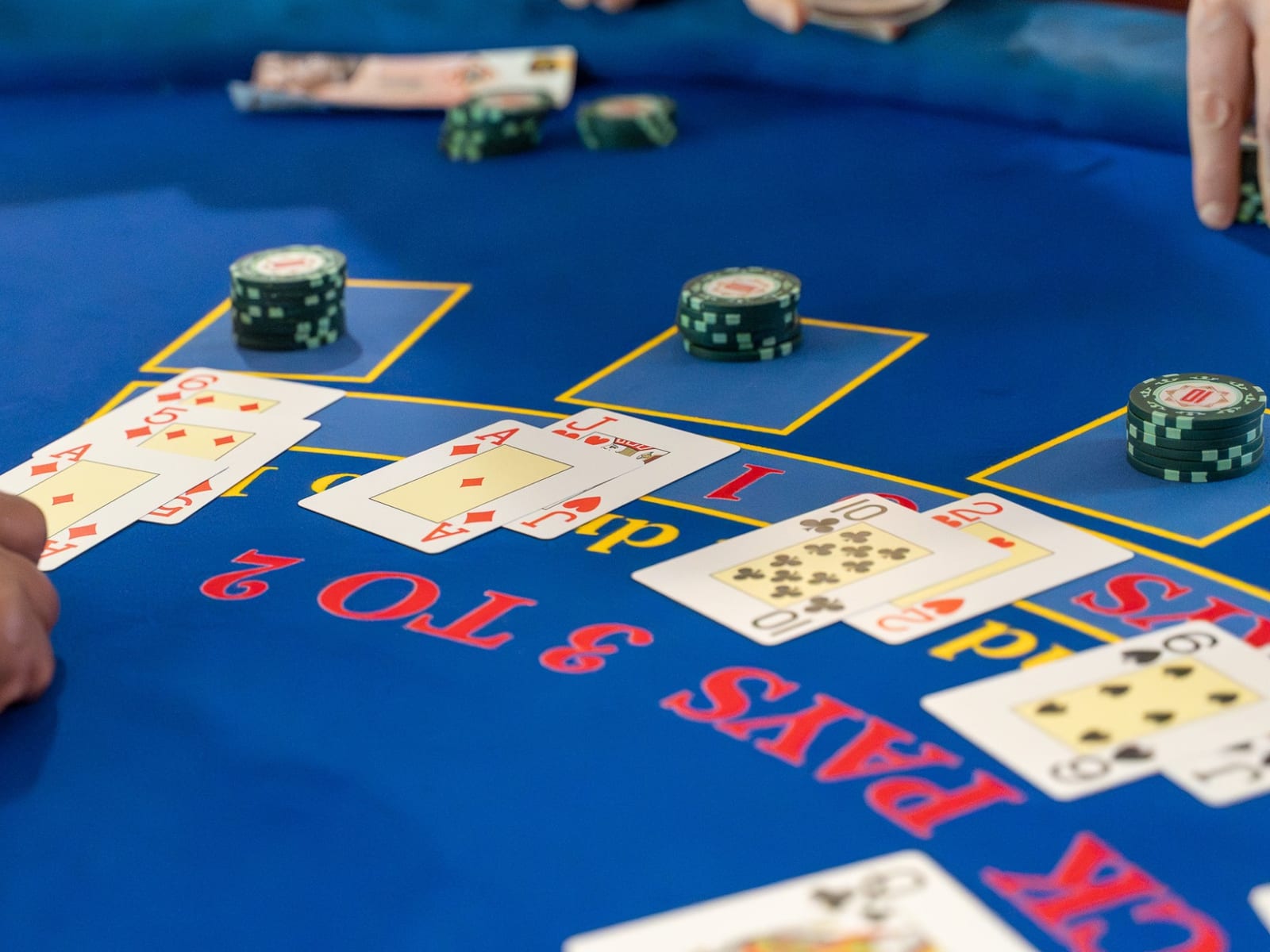
The Aim of the Game
The goal of blackjack is simple: beat the dealer without going over 21.
You’re not playing against the other guests at the table, you’re each playing against the dealer independently. If your hand totals closer to 21 than the dealer’s without going over, you win. If you go over 21 (called “busting”), you lose regardless of what the dealer does.
That’s the entire game at its core. Everything else is detail.
Card Values
Before you can play, you need to know what each card is worth.
| Card | Value |
|---|---|
| 2 through 10 | Face value (a 7 is worth 7) |
| Jack, Queen, King | 10 |
| Ace | 1 or 11, whichever helps your hand |
The flexibility of the Ace is what makes it special. If you have an Ace and a 6, your hand is either 7 or 17: you choose whichever is better for you. An Ace counted as 11 without busting is called a “soft” hand. Once the Ace needs to become a 1 to avoid busting, it’s a “hard” hand.
Blackjack (the name of the game and also the best hand in it) is when you’re dealt an Ace and any 10-value card as your first two cards. This pays 3:2 in a real casino, and at a fun casino event it’s the hand that gets the biggest cheer.
How a Round Works
- Place your fun money. At the start of each round, all players place their fun money on the marked spot on the table in front of them.
- Cards are dealt. The dealer gives each player two cards face up, and deals themselves two cards, one face up, one face down (the “hole card”).
- Check for blackjack. If any player has an Ace and a 10-value card, they have blackjack and win immediately, unless the dealer also has blackjack, in which case it’s a push and nobody wins or loses.
- Players decide what to do. Starting from the player to the dealer’s left, each person plays their hand. The dealer then resolves their own hand and pays or collects the fun money.
What Hit, Stand, Split, and Double Down Mean
These are the four decisions you can make with your hand.
Hit ask for another card. You can hit as many times as you like until you’re happy with your total or you bust. Signal at the table: tap the felt with your finger.
Stand stick with what you have. No more cards. The dealer moves on to the next player. Signal at the table: wave your hand flat over your cards.
Split if your first two cards are a matching pair (two 8s, two Aces, two Kings), you can split them into two separate hands and play each independently. You place additional fun money to match your original hand to do this. Signal at the table: place matching fun money next to your original and hold up two fingers.
Double down double your initial fun money and receive exactly one more card, no more. You’re committing to that single card, so it works best when your hand is in a strong position. A total of 9, 10, or 11 is where doubling is most attractive. Signal at the table: place matching fun money next to your original and hold up one finger.
The Dealer’s Rules
The dealer doesn’t make choices, they follow fixed rules, which is what makes blackjack partly strategic rather than purely random.
Dealers must hit on any hand totalling 16 or below, and stand on any hand totalling 17 or above. This is fixed. The dealer has no discretion.
This matters because it tells you something useful: the dealer will always take another card if they’re below 17. If the dealer’s face-up card is a 6, suggesting their hole card might be a 10 for a total of 16, they’re likely to hit and possibly bust. This knowledge is what basic strategy is built on.
Basic Strategy in Plain English
Basic strategy is simply the mathematically correct decision for every hand combination. You don’t need to memorise all of it: knowing the rough principles gets you most of the way there.
| Your Hand | Dealer’s Upcard | What to Do |
|---|---|---|
| Hard 8 or below | Anything | Hit |
| Hard 9 | 3 to 6 | Double down |
| Hard 10 or 11 | 2 to 9 | Double down |
| Hard 12 to 16 | 2 to 6 | Stand (dealer likely to bust) |
| Hard 12 to 16 | 7 to Ace | Hit |
| Hard 17 or above | Anything | Stand |
| Soft 17 (Ace + 6) | Anything | Hit |
| Soft 18 (Ace + 7) | 9, 10, Ace | Hit |
| Pair of Aces | Anything | Split |
| Pair of 8s | Anything | Split |
| Pair of 10s | Anything | Stand (never split tens) |
The core principle: when the dealer shows a weak upcard (2 to 6), they’re likely to bust, so you can afford to be conservative. When the dealer shows a strong upcard (7 to Ace), assume they have a 10 in the hole and play accordingly.
Tips for First-Timers
- When the dealer shows a 7 or higher, assume they’ll make a strong hand. Hit a stiff total of 12 to 16 rather than standing and hoping. Standing on 12 against a dealer’s 7 feels safe, but your 12 won’t beat their likely 17 or better.
- Always split Aces. Two Aces is a poor hand as 12 (or 2), but split them and each becomes a strong starting card, with a chance to catch a 10 for blackjack.
- Never split tens. A pair of tens is a 20, one of the best hands in the game, and there’s no reason to break it up.
- Play steadily and enjoy it. Fun casino is entertainment, not a recovery strategy, so keep your plays even rather than chasing a loss with a bigger one.
- Ask your dealer anything. Reading the table is their job, not yours, and they’re happy to guide a first-timer through the choices.
Why Blackjack Works So Well at a Casino Night
Rounds take two to three minutes from first hand to paid-out winnings. New players can join mid-session and be up to speed within two hands. Multiple players share the same table but play independently, so the pace suits different levels of experience at once, and the croupier’s natural commentary keeps the table warm and sociable. It’s the game that works at weddings, Christmas parties, corporate events, charity nights, and birthdays equally well.
Bring Blackjack to Your Event
Now you know how it plays, see how easy it is to put a full-size table in your venue. We cover blackjack table hire across London and the Home Counties, with a uniformed croupier and all the fun money included.
Browse all our casino games, learn the other tables on our How to Play guides, or get a quote for your event.
FAQs
Do I need to know how to play blackjack before the event?
Not at all. Our croupiers explain the rules at the table in under a minute, and they’re trained to make complete beginners feel comfortable. Most of our guests have never played before, and you’ll be playing confidently within two hands.
What’s the difference between blackjack and other card games?
The key difference is that you play against the dealer, not against the other players. This makes blackjack more sociable than games like poker, where there’s a competitive edge between players. In blackjack, everyone at the table shares an interest in the dealer busting.
Is there a strategy to blackjack, or is it just luck?
Both. The cards are dealt randomly, so there’s always luck involved. But basic strategy, knowing when to hit, stand, split, or double down based on your hand and the dealer’s upcard, genuinely improves your chances. Guests who understand even the basics tend to get more out of the game and last longer at the table.
What does “bust” mean in blackjack?
Busting is when your hand goes over 21. If you bust, you lose the round straight away, regardless of what the dealer is holding. Avoiding the bust is the central tension of the game.